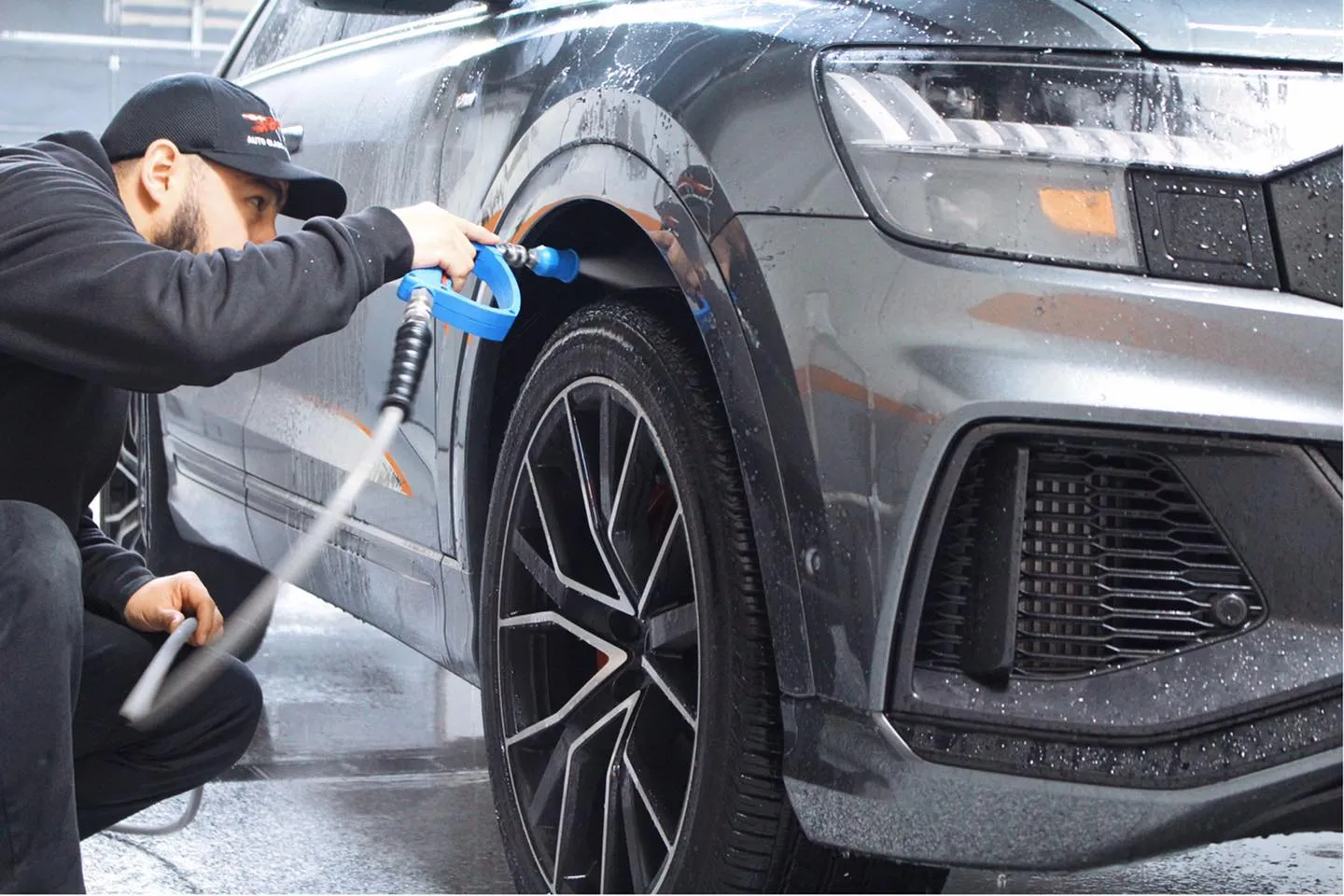
Florida does not issue a detailing license. There is no state exam, no apprenticeship, no board. You can legally wash a stranger's car for money tomorrow morning.
That is why so many detailers assume the paperwork does not apply to them — and why the ones who find out otherwise usually find out at the worst possible moment.
What Florida actually requires
Two things, and neither is a detailing license:
- A local business tax receipt. Broward County requires one from every business operating in the county, including home-based operations and sole proprietors with no employees. If you work inside city limits — Fort Lauderdale, Hollywood, Pembroke Pines, Davie and the rest — most municipalities want their own receipt issued before the county will issue yours.
- To collect and remit sales tax where it applies to what you are selling. Talk to an accountant about your specific menu; it is cheaper than guessing.
The BTR renewal window opens July 1 and receipts expire September 30. Miss it and penalties stack fast: 10% in October, 15% through late November, then 20 to 25% plus a $25 fee from December on.
Do you need an LLC?
Not legally. You can operate as a sole proprietor with a business tax receipt and never file with the state.
What an LLC does is separate your business from your personal life. If a client sues over a ruined interior and you are a sole proprietor, your savings and your car are on the table. With an LLC, in most circumstances, only the business is.
In Florida it is cheap:
That May 1 deadline is the one that catches people. It is not a bill anyone mails you.
An LLC is also not a shield against your own negligence, and it does nothing for you if you mix personal and business money in one account. The protection is real, but it is not magic.
The insurance mistake that ends detailing businesses
Here is the part almost nobody gets right.
Most detailers buy general liability, see "$1 million" on the certificate, and feel covered. General liability handles the client who trips over your hose. It typically excludes damage to property in your care, custody and control — which is the precise legal description of the car you are standing over with a rotary polisher.
Burn through clear coat on a black Tesla, drop an extractor wand through a windshield, park a customer's car and get it hit: that is the claim most likely to happen to you, and standard general liability is the policy least likely to pay it.
The coverage that does is garage keepers legal liability. Ask for it by name. If a broker tells you general liability is enough for a detailer, find another broker.
Median costs from a national small-business insurer give you a sense of the numbers:
| Coverage | Monthly | Annual | What it is for |
|---|---|---|---|
| General liability | $54 | $646 | Third-party injury and property — not the client car |
| Commercial auto | $46 | $550 | Your work vehicle. Personal auto will deny a work claim |
| Business owner's policy | $89 | $1,073 | Liability plus your equipment, bundled |
| Workers' compensation | $131 | $1,567 | Only once you have employees |
Typical limits run $1 million per occurrence and $2 million aggregate. Garage keepers is quoted separately and priced on the value of the vehicles you handle — a detailer working on daily drivers pays very differently from one doing exotics.
And note the commercial auto line. Your personal auto policy almost certainly excludes business use. If you are hauling a pressure washer to paid jobs and you get in an accident, that is a conversation you do not want to have with an adjuster.
The order to do it in
- Form the LLC with the state — $125, done online, same week.
- Get an EIN from the IRS. It is free and takes about ten minutes. Anyone charging you for one is selling you nothing.
- Open a business bank account. This is what actually makes the LLC protection hold up.
- Get the city receipt, then the county BTR. In that order, or the county sends you back.
- Insure it properly — general liability, garage keepers, commercial auto. Get the certificate before your first paid job, not after your first claim.
- Calendar May 1 for the annual report, every year, permanently.
All in, you are looking at a few hundred dollars to be fully legitimate in Broward County, plus roughly $100 to $150 a month in insurance. Against a single clear-coat claim, that is not a cost. It is the cheapest thing on your invoice.
General information for detailers working in Broward County, FL, current as of September 2026 — not legal, tax or insurance advice. Fees and requirements change, and your situation may differ. Confirm current amounts with the Florida Division of Corporations and the Broward County Tax Collector, and talk to a licensed agent about the coverage your specific work needs.